PLDadmin
Understanding the Foreclosure Timeline: A Guide for Homeowners
Facing foreclosure can feel overwhelming, but knowing the key steps—and where to turn for help—can make the process more manageable. Whether you’re a homeowner, real estate investor, or part of the Promise Land Development family, here’s a concise breakdown of what typically happens when a property enters foreclosure, along with ways to protect your interests.
1. Missing Payments & Default Stage
The foreclosure process often begins when mortgage payments are missed. While exact rules vary by lender and state, it’s common for lenders to start the legal foreclosure process once you are approximately 120 days behind.(Consumer Financial Protection Bureau)
Key touches:
Many lenders attempt contact around Day 36 after a missed payment and send written notices by around Day 45.(Investopedia)
2. Notice of Default (NOD)
After several missed payments—often around 90 days behind—a formal Notice of Default is issued. This serves as a warning and typically begins the legal foreclosure timeline.(Investopedia)
This notice usually outlines:
The amount owed
A deadline to cure the default (often 30 days)
Consequences of non-payment
3. Pre-Foreclosure & Legal Filing
Once the NOD period passes without resolution, the lender may proceed with a foreclosure filing. The specifics depend on your state:
Judicial foreclosure (e.g., Florida, Ohio) requires court involvement and can extend the timeline significantly.(Miami Law Firm, Investopedia)
Nonjudicial foreclosure follows a faster route—often via a power-of-sale clause—allowing the sale to proceed without court oversight.(Wikipedia)
Typical U.S. timeline from default to sale ranges between 180 and 200 days, though this can vary by jurisdiction.(New Again Houses, Peck Law Firm)
4. Foreclosure Sale & Auction
Depending on the pathway:
In nonjudicial states, the auction may occur a few months after the notice period.
In judicial states, it might take many months—sometimes even a year or more from initial default to actual sale.(Tennessee Housing Development Agency)
5. Real Estate Owned (REO) Status
If the property doesn’t sell at auction—perhaps due to low bidding—it becomes Real Estate Owned (REO), meaning the lender now holds the property and may sell it via traditional real estate channels.(Investopedia)
6. Eviction & Redemption Rights
Post-sale, if occupants remain in the home, eviction procedures begin. Some states offer a redemption period, giving the homeowner a limited time to reclaim the property by settling outstanding debts and fees.(Investopedia)
The duration of eviction and redemption varies significantly by state and individual circumstances.
7. Key Factors Influencing Timeline
Several variables can speed up or delay foreclosure:
State laws: Judicial versus nonjudicial processes vary widely.(Consumer Financial Protection Bureau, Miami Law Firm)
Homeowner engagement: Presenting mitigation options—like loan modifications or deeds in lieu of foreclosure—can postpone or halt foreclosure.(New Again Houses)
Legal disputes or procedural errors: Can add significant delays.
Court backlog or local market conditions: In high-volume markets, foreclosure processes may stretch longer.(Investopedia)
What You Can Do: Practical Steps to Take Now
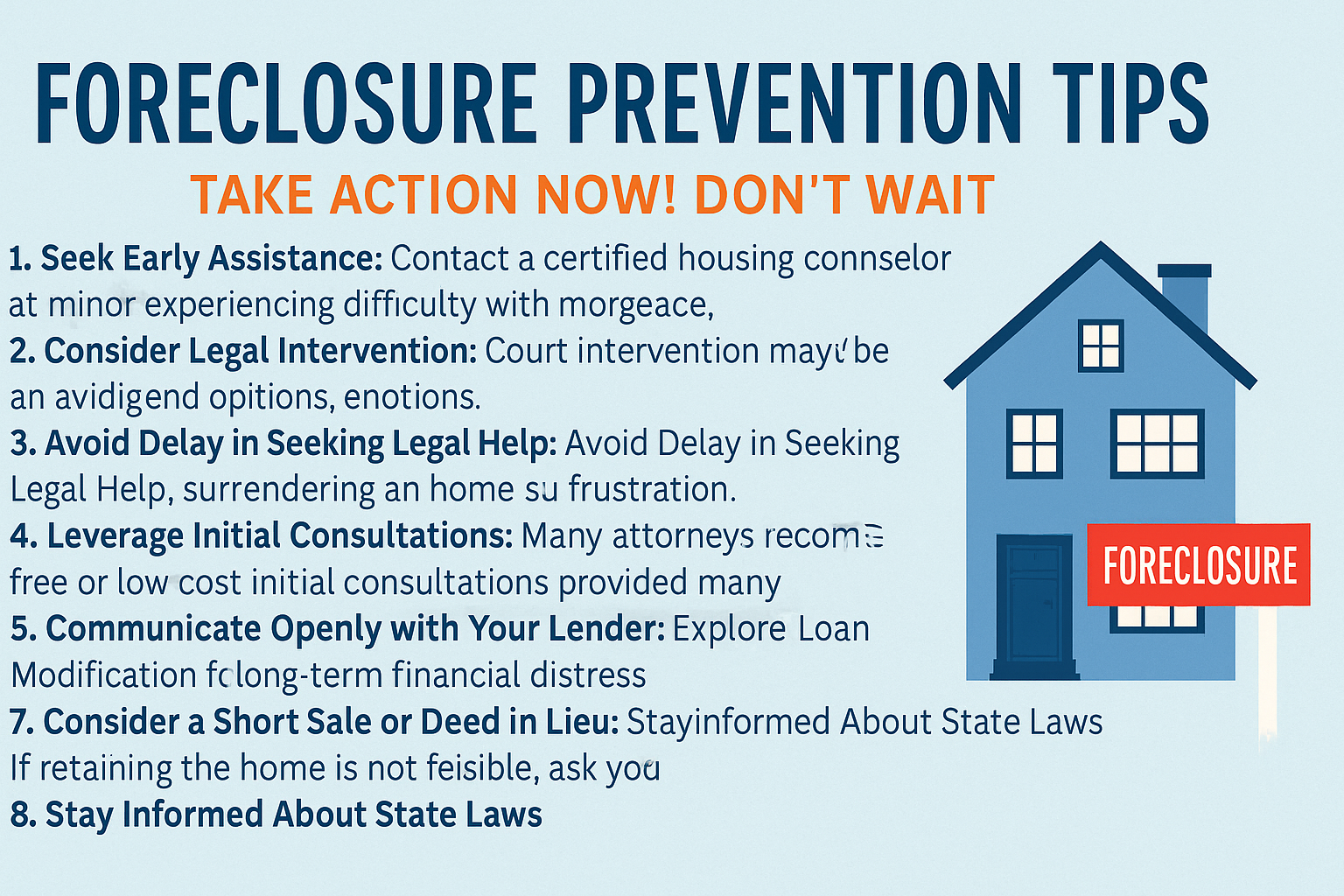
Communicate early with your lender or servicer. Many offer options like repayment plans or loan modifications.
Reach out to a HUD-approved housing counselor. The CFPB offers resources to locate one.(Consumer Financial Protection Bureau)
Explore alternatives to foreclosure, such as:
Short sales
Deeds in lieu of foreclosure—these can help avoid eviction and reduce credit impact.(Wikipedia)
Understand your state’s laws, especially about court proceedings, redemption timelines, and eviction processes.
Summary Table
| Phase | Typical Duration | Key Action |
|---|---|---|
| Missed payments to NOD | ~120 days behind | Lender issues default notice |
| NOD to foreclosure filing | Variable by state | Court or nonjudicial steps begin |
| Filing to sale/auction | Months (3–12+ depending) | Auction or sale occurs |
| Sale to eviction/redemption | Weeks to months | Occupant may be evicted or redeem property |
Further Reading & Resources
Consumer Financial Protection Bureau: Foreclosure timeline basics
State-specific insights: Foreclosure in Ohio (judicial process)
In Closing
Foreclosure timelines can feel daunting—but knowledge is power. By understanding what to expect and knowing where to get help, homeowners and real estate professionals can better navigate these challenges. Promise Land Development stands ready to guide clients through their options, offering clarity, support, and trusted expertise every step of the way.